Posts

Showing posts with the label Cybersecurity

Cryptography

Image
Cryptography is the use code to secure information. It was original from Greek words 'kryptos' and 'graphein' , meaning 'hidden' and 'to write' . There are some key term that need to be understood to get earlier to understand cryptography. plain text is the information or message that is to be hidden. encryption is the operation of distinguishing the plain text. encryption algorithm is the set of rules used for encrypting the plain text.  encryption key is the value need to be input into encryption algorithm to perform the encoding. cipher text/cryptogram is the encrypted plain text.  decryption algorithm is the set of rules used for decrypting the plain text.  decryption key is the value need to be input into decryption algorithm to perform the decoding.  Put the key terms together, the process of cryptography between a sender and a receiver can be explained as below:
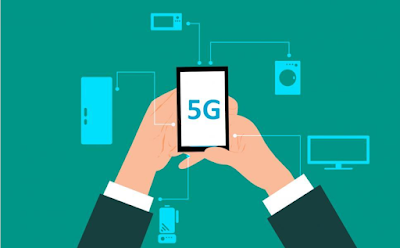
5G's Pros and Cons, and the Risk to Data Privacy

Image
Evaluating the Strengths and Weaknesses of 5G Technology Implementation Associated with Data Privacy Background As technology has been rapidly advancing, the Internet is becoming the primary source of connection between humans across businesses, governments and public services. To fulfil the greater demand from users, a fifth generation of mobile wireless network (5G) has been designed in the last couple of years to provide extremely fast speed, broader bandwidth for more device connection, and to reduce connection latency (Shankaranarayanan & Ghosh, 2017). However, it has been argued that the 5G implementation provides a significant threat to privacy due to its newly design technology (Aiqing & Xiaodong, 2017). This paper will provide an overview of 5G wireless network, and evaluate the opportunities and challenges of its implementation. 5G has been innovated to anticipate the tremendous growth of smart devices and technologies communicating via the Internet. It...

A Study on Cyber Security Policy in Australia

Background Utilizing the internet and digital technology, Australia has enabled the public to participate in a maturing global digital economy. With increasing internet users from 83% in 2014 (ABI Research, 2015) to approximately 90% in 2017 (Department of the Prime Minister and Cabinet (PM&C), 2016) , PM&C stated that the internet based economy generated $79 billion, equal to 5.1% of GDP, in 2014 while cybercrime could cost Australian 17 billion annually. To avoid financial losses and ensure a safe and secure cyber environment, Australia implemented National Plan to Combat Cybercrime in 2013. The plan is monitored and enforced by Attorney-General’s Department and Australian Signals Directorate. The Effectvieness of Implementation Australian is ranked 7 th in the world for cybersecurity commitments (International Telecommunication Union (ITU), 2017) . There are two significant factors leading to this success. The most important lead is transparent political action. Cl...

A Study on Cyber Security Policy in Cambodia

Background Cambodia has stepped into the digital economy era since online payment systems are now employed. This evolution depends on the Internet and online communication. It brings with its threats to the cyberspace that could pose financial loss and breaches of confidential information for current and future generations. To sustain cyber trust and avoid the consequence, Cambodia adopted Cambodian Information Communication Technology (ICT) Plan 2020 in 2014 developed by Korean International Cooperation Agency (KOICA). This plan focuses on people, connectivity, capability and e-services (KOICA, 2014) . The implementation of this plan relies on Ministry of Posts and Telecommunications (MPTC) as having authority on the ICT field. The Effectvieness of Implementation There have been several contributions that may enable the plan to meet its goals. One drive is government initiative. In the same year of the plan establishment, the first of Cybercrime Law was drafted. The law obj...